Self-Motivation: 2 Types, 3 Components & How to Stay Motivated
Have you ever started a goal feeling completely motivated, only to lose momentum a few days or weeks later?
I know I have…
Let’s face it, we all need a little motivation on our life journey. It’s the fuel that propels us forward, especially during challenging times. When we feel like giving up, a spark of motivation can remind us of our potential and the dreams we aim to achieve.
And it’s worth emphasizing—you’ll certainly need a jolt of motivation as you embark on your journey of self-discovery.
Motivation can come from many sources: a kind word from a friend, an inspiring story, or even a personal goal that ignites a fire within us. These moments can give us the push we need to keep moving forward and begin forging a new path toward the best version of ourselves.
And self-motivation is a key part of that journey. Sometimes, moving forward means letting go of old patterns and making room for something new.
But what happens when that motivation begins to fade?
Before long, you may find yourself wondering:
Why can’t I stay motivated?
The truth is, self-motivation isn’t simply about wanting something badly enough. Motivation can rise and fall, and understanding what drives you can make a big difference in how you approach your goals.
When you understand the different types of motivation, what helps you get started, and what keeps you moving when things become difficult, you can become more intentional about creating forward movement.
In this guide, we’ll explore:
- what self-motivation means
- the difference between intrinsic and extrinsic motivation
- three important components of motivation
- why motivation can disappear
- five practical ways to build self-motivation when you feel stuck
- how motivation connects to goal achievement and personal growth
Let’s get into it.
What Is Self-Motivation?
Self-motivation is your ability to move yourself toward a goal or desired outcome without constantly needing someone else to push you.
Motivation is what helps give direction to your behaviour and encourages you to take action.
It can influence whether you:
- begin something you’ve been thinking about
- continue after the initial excitement disappears
- put effort into reaching a goal
- keep moving after a setback
- make changes that matter to you
The American Psychological Association describes motivation as something that gives purpose or direction to behaviour and distinguishes between internal motivating forces and external factors such as rewards or consequences.
In everyday life, that means motivation may come from inside you, from outside circumstances, or from a combination of both.
And that brings us to two important types of motivation.

The Two Basic Types of Motivation
Intrinsic vs. extrinsic motivation: what’s the difference?
Motivation can come from within us or from outside influences. These two forms are commonly known as intrinsic motivation and extrinsic motivation. You may also hear them described more simply as internal and external motivation.
1. Intrinsic Motivation
This type of motivation comes from within and is driven by personal desires, interests, needs, and goals.
2. Extrinsic Motivation
This type of motivation is influenced by external factors such as rewards, praise, recognition, or consequences.
1. Intrinsic Motivation
Intrinsic motivation comes from within.
You do something because the activity itself is personally meaningful, interesting, satisfying, enjoyable, or connected to something you genuinely care about.
For example:
Imagine you’ve always wanted to write a nonfiction book.
No one is forcing you to write it.
There may not be a prize waiting for you.
You simply feel deeply drawn to the idea of sharing your expertise and seeing your words become something real.
That desire is an example of intrinsic motivation.
Other examples might include:
- learning a skill because you’re genuinely curious
- exercising because you enjoy feeling stronger
- creating art because you love expressing yourself
- volunteering because contributing to others matters to you
- working toward a personal goal because it reflects the person you want to become
Intrinsic motivation often connects deeply with your values, interests, identity, and sense of purpose.
2. Extrinsic Motivation
Extrinsic motivation comes from outside of you.
Instead of doing something primarily because the activity itself is satisfying, you’re motivated by an external outcome.
That might include:
- money
- recognition
- praise
- awards
- promotions
- grades
- deadlines
- avoiding negative consequences
Imagine you’re working on a large project at work because your employer has promised a significant bonus and public recognition if the project is completed successfully.
The bonus and recognition are examples of extrinsic motivation.
Extrinsic motivation isn’t necessarily bad.
Sometimes an outside incentive gives us the push we need to begin or complete something important.
Both forms of motivation can play a role in helping us move toward our goals.
The 3 Components of Motivation
Understanding why you’re motivated is helpful, but there’s another question:
What does motivation actually look like when you’re pursuing a goal?
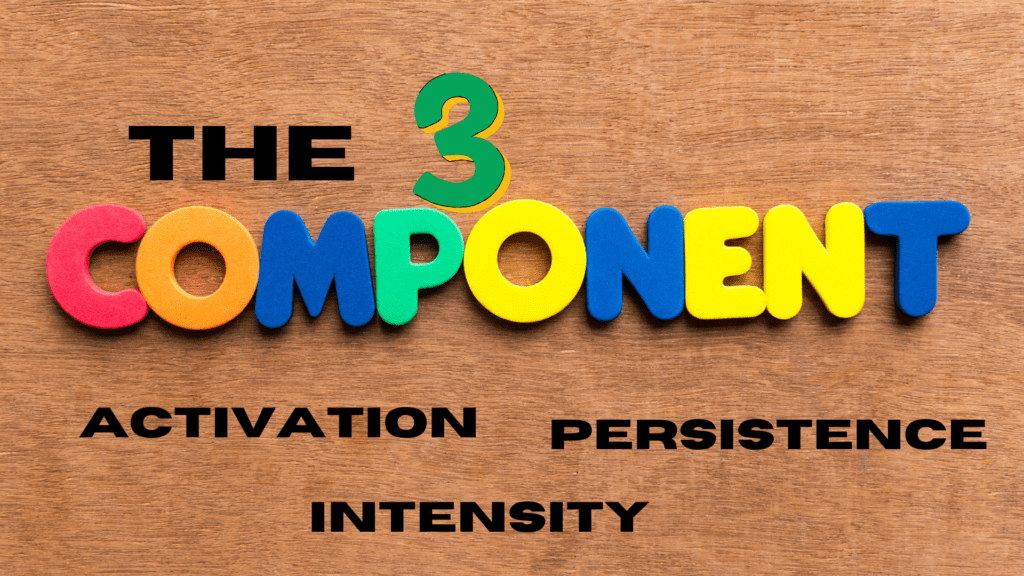
One useful way to understand motivated action is through 3 components:
1. Activation
Activation is getting started.
It’s the moment when intention becomes action.
You decide to:
- sign up for the class
- submit the application
- open the document
- make the phone call
- begin exercising
- create the plan
- take the first step
You can have a beautiful dream, an exciting idea, a meaningful goal, but eventually something has to move from thought to action. Can you relate?
That’s activation.
Sometimes we don’t actually need more information.
We just need to begin.
Ask yourself:
What is one action I can take today that moves this goal out of my head and into motion?
2. Persistence
Like I mentioned earlier, getting started is important
But we both know that starting is only the first step. The real challenge is often continuing when the initial excitement fades.
Persistence is continuing when the process becomes difficult, inconvenient, slower than expected, or less exciting.
This is where many goals are won or lost.
Persistence might mean:
- continuing after receiving a “no”
- trying a different approach after something doesn’t work
- returning to your plan after getting off track
- working when the initial excitement has disappeared
- reminding yourself that one difficult week doesn’t erase your progress
You don’t need perfect consistency to be persistent.
Sometimes persistence simply means:
I stopped, but I chose to start again.
3. Intensity
Intensity refers to the amount of energy, focus, and effort you bring to the goal.
Two people might pursue the same goal but approach it very differently.
One might take occasional action.
The other might consistently make the goal a priority and devote focused time and effort to it.
Intensity doesn’t mean working yourself into exhaustion.
It means asking:
Am I giving this goal enough focused effort for progress to happen?

Why Self-Motivation Matters
Self-motivation matters because many meaningful changes in life require us to keep moving even when someone else isn’t standing beside us telling us what to do next.
Here are 3 reasons it matters.
1. Self-Motivation Helps Turn Intention Into Action
You can have great ideas.
Setting goals gives those ideas direction.
Creating a plan gives you a path to follow.
But at some point, progress requires action.
Self-motivation helps bridge the gap between:
“I want to…” and “I’m actually doing it.”
2. Self-Motivation Helps You Continue Through Challenges
Nearly every meaningful goal comes with challenges.
There may be setbacks.
Disappointments.
Fear.
Uncertainty.
Slow progress.
Unexpected changes.
Self-motivation doesn’t mean those things stop affecting you.
It means you develop the ability to reconnect with your reason for moving forward and decide what to do next.
3. Progress Can Strengthen Your Sense of Capability
There is something powerful about seeing yourself follow through.
Taking action, even small action, gives you evidence that you’re capable of moving forward.
You begin replacing:
“I don’t know if I can do this.” with: “I’m learning how to do this.”
That sense of progress can encourage you to continue.
Why Do We Lose Motivation?
If you’ve been struggling with motivation, don’t automatically assume you’re lazy or incapable.
Sometimes a lack of motivation is simply a sign that something needs to change.
Here are a few common reasons motivation can fade:
Your Goal Is Too Vague
Goals like “change my life” or “become successful” may sound meaningful, but they don’t give you a clear next step. The more specific your goal is, the easier it becomes to take action.
The Goal Feels Too Big
When the distance between where you are and where you want to be feels overwhelming, it can be difficult to begin. Breaking a large goal into smaller steps can make it feel more manageable.
You’ve Lost Connection With Your Why (Purpose)
You may know what you want to accomplish but have lost sight of why it matters to you. Reconnecting with that deeper reason can help renew your motivation.
You’re Waiting to Feel Motivated
Motivation doesn’t always feel exciting. Sometimes it looks like discipline, commitment, or simply choosing to take the next small step.
Progress Feels Too Slow
When results don’t happen quickly, it’s easy to become discouraged. But progress isn’t always dramatic, small actions can still be moving you forward.
The Goal May Not Truly Be Yours
Sometimes we pursue goals because of expectations, comparison, or what we think we should want.
That’s why self-awareness matters.
Before asking:
“How can I force myself to stay motivated?”
consider asking:
“Do I genuinely want where this goal is taking me?”
5 Ways to Build Self-Motivation When You Feel Stuck
So, here are five practical ways you can build self-motivation when you’re feeling stuck, inconsistent, or unmotivated.
1. Reconnect With Your Why
When motivation drops, remind yourself why the goal matters to you.
Ask:
Why do I want this?
Then go a little deeper:
Why is this important to me?
Understanding your deeper reason can help you reconnect with the motivation behind your goal.
2. Make the Next Step Smaller
Big goals can feel overwhelming. What has helped me is focusing on the one thing I need to accomplish and identifying one small next step.
For example:
Instead of “I need to change careers,” try:
“I’ll research three career options this week.”
Small actions make it easier to get started; and getting started builds momentum.
3. Create Structure
Don’t rely only on feeling motivated.
Give your goal some structure by setting a deadline, scheduling time for it on your phone or wall calendar, creating a routine, or asking someone to hold you accountable.
Motivation may help you start, but structure can help you keep going.
4. Identify What’s Missing
Think back to the 3 components of motivation:
Activation. Persistence. Intensity.
Ask yourself:
- Am I struggling to start?
- Am I struggling to keep going?
- Or am I struggling to give the goal enough focus and effort?
Identifying the problem can help you decide what needs to change.
5. Track Your Progress
It’s easy to focus on how far you still have to go and forget how much progress you’ve already made.
Track your small wins, completed actions, and milestones.
And if something isn’t working, adjust your approach.
Sometimes staying motivated doesn’t mean trying harder; it means finding a better way forward.

Why Self-Motivation Matters for Millennial Women
For many millennial women, adulthood hasn’t necessarily followed the simple path we may once have imagined.
Career changes.
Starting over.
Family responsibilities.
Entrepreneurship.
Changing priorities.
Personal growth.
Financial pressure.
Comparison.
Questions about identity.
Questions about purpose.
And sometimes the uncomfortable realization that what you wanted at 25 isn’t necessarily what you want at 35 or 40.
That can leave you asking:
What’s next for me?
This is where self-motivation and self-discovery begin to intersect.
Before you can stay motivated toward a direction, it helps to understand whether that direction actually reflects who you are now.
Sometimes you don’t need another motivational quote.
Sometimes you just need clarity about:
- what matters to you
- what you’re naturally drawn toward
- what you’ve outgrown
- what kind of life you want to build
- which goals are genuinely yours
- what you’re willing to take action on
Motivation becomes much more meaningful when your actions are connected to something you truly value.
You don’t need to have your entire life figured out.
You simply need enough clarity to determine your next meaningful step.
Questions to Help You Discover What Motivates You
Before you go, take a few minutes to reflect on these questions.
You may want to write your answers in a journal.
1. What goal am I currently struggling to stay motivated toward?
Be specific.
2. Why did I originally choose this goal?
What did you hope it would change?
3. Does this goal still matter to me?
Or are you pursuing it because you feel like you should?
4. Is my motivation mostly intrinsic, extrinsic, or a combination of both?
What internal or external factors are driving you?
5. Which part of my motivation needs the most attention right now?
Activation?
Persistence?
Intensity?
6. What is one action I can realistically take next?
Not ten actions. Not your entire five-year plan.
One next step.
Write it down.
Then decide when you’re going to do it.
Now I’d love to hear from you:
Which part of motivation do you struggle with most right now: getting started, staying consistent, or keeping your energy and focus once you’ve begun?
Share your answer in the comments. Your response may also encourage another woman who is navigating the same challenge.
See you in the next post!