The 3 Key Aspects of Personal Development
Personal development is an ongoing journey of learning, growing, and becoming more intentional about who you are and where you want to go — both personally and professionally.
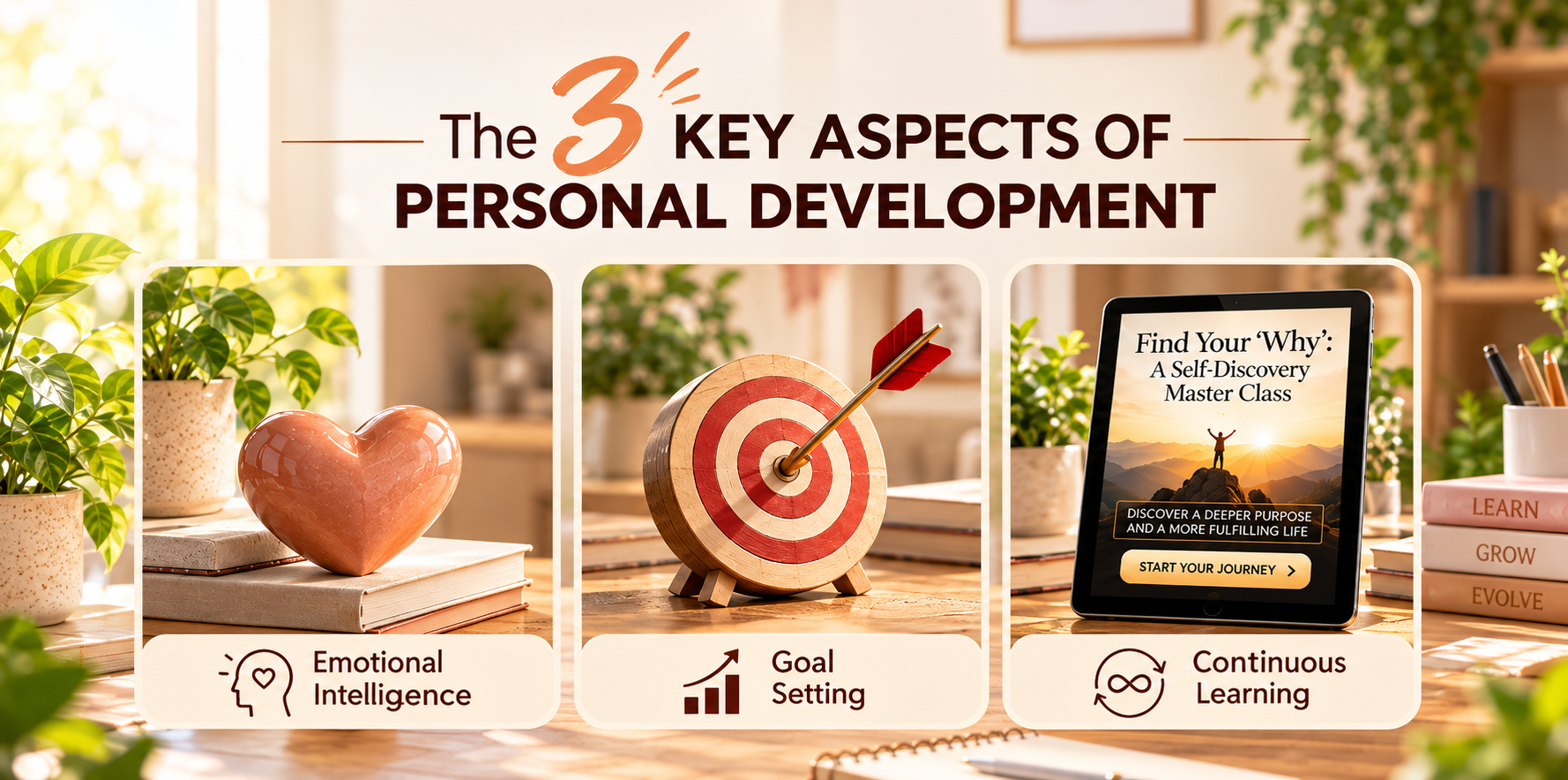
While personal growth can include many different areas, 3 aspects stand out as especially important: Emotional Intelligence, Goal Setting, and Continuous Learning.
Together, these 3 areas can help you better understand yourself, navigate challenges, make more intentional decisions, and continue moving toward the life you want to create.
Whether you’re building a career, navigating relationships, working toward a personal goal, or simply trying to figure out your next step, developing these skills can help you grow with greater self-awareness, confidence, and resilience.
Let’s begin with the first one.
Emotional Intelligence: The Foundation of Personal Growth
Let’s be real: in a fast-paced world where success is often measured by what we accomplish, there is an important part of personal development that can easily be overlooked — Emotional Intelligence.
For millennial women navigating careers, relationships, responsibilities, personal growth, and seasons of self-discovery, developing emotional intelligence can make a meaningful difference.
It affects how you understand yourself, respond to difficult situations, communicate with others, make decisions, and manage your emotions when life doesn’t go according to plan.
What Is Emotional Intelligence?
Emotional intelligence is the ability to recognize, understand, and manage your own emotions while also being aware of and responding appropriately to the emotions of others.
It is commonly connected to 5 key areas:
Self-awareness: Recognizing your emotions, strengths, weaknesses, patterns, and how they influence your thoughts and behaviour.
Self-regulation: Learning to manage your emotions in healthy ways, pause before reacting impulsively, and respond more intentionally under pressure.
Motivation: Having the internal drive to continue pursuing meaningful goals, even when progress feels slow or challenges arise.
Empathy: Being able to understand and consider the feelings and perspectives of others, which can strengthen relationships and communication.
Social skills: Building and maintaining healthy relationships, communicating effectively, working through conflict, and interacting well with others.
For me, self-awareness has played an important role in my own personal growth.
Learning to pay closer attention to my emotions, strengths, weaknesses, thoughts, and responses has helped me better understand myself instead of simply reacting to whatever I was feeling in the moment.
And that is one of the powerful things about emotional intelligence: it gives you the opportunity to become more aware of what is happening within you so you can begin choosing how you want to respond.
As these skills develop, they can help you navigate challenges more intentionally, make better decisions, strengthen your relationships, and continue growing into the person you want to become.

Why Emotional Intelligence Matters for Millennial Women
As millennial women, many of us are balancing multiple areas of life at once.
Let’s list them: careers, relationships, family responsibilities, personal goals, and our own desire to keep growing.
And while we may be focused on everything happening around us, it can be easy to overlook what is happening within.
Developing emotional intelligence can help you become more aware of these interruption to your emotions, understand how they influence your choices, and respond to life with greater intention.
Here are 3 ways emotional intelligence can support your personal growth:
1. Building Stronger Relationships
Whether in your personal life, family, friendships, or workplace, healthy relationships require more than simply communicating ;they also require understanding.
Emotional intelligence can help you become more aware of how others may be feeling while also helping you communicate your own thoughts and emotions more effectively.
As you strengthen skills such as empathy, listening, and emotional awareness, you may find it easier to navigate misunderstandings, communicate your needs, and build deeper, more meaningful connections.
2. Making More Intentional Decisions
Our emotions can influence the decisions we make, sometimes without us even realizing it.
When you become more aware of what you are feeling and why, you can create space between an emotional reaction and the decision you ultimately make.
This can be especially valuable when you’re facing important choices involving your career, finances, relationships, family, or future direction.
Instead of allowing fear, frustration, pressure, or uncertainty to make the decision for you, emotional intelligence can help you slow down, consider your options, and choose a direction that better aligns with your values, priorities, and long-term goals.
3. Developing Greater Self-Awareness
Self-awareness is one of the most valuable parts of emotional intelligence because it gives you greater insight into your own patterns, needs, strengths, and reactions.
You may begin noticing what tends to energize you, what drains you, which situations trigger certain reactions, and where your thoughts or behaviours seem to repeat themselves.
That awareness can be especially valuable when you’re balancing different roles, expectations, and responsibilities. It can help you recognize when you’re becoming overextended, when something no longer feels aligned, or when you may need to reassess what is working for you.
The goal isn’t to analyze every emotion or get everything right.
It’s about knowing yourself well enough to recognize what may need your attention and make choices with greater intention.
Managing Stress and Emotions
Self-awareness helps you notice what is happening within you. Self-regulation helps you decide what to do next.
Life can feel overwhelming at times, especially when responsibilities, work, family, and personal goals all seem to demand your attention at once.
Self-regulation doesn’t mean suppressing your emotions or pretending everything is fine. It means giving yourself enough space to respond thoughtfully rather than allowing stress to automatically take over.
I’ve had to practise this in different areas of my own life.
When I worked as a dental assistant, staying composed was essential in a fast-paced environment. There were moments when I had to think clearly, communicate effectively, and continue doing what needed to be done even when the pressure was high.
That experience taught me that staying calm doesn’t mean you aren’t feeling the pressure. It means learning how to manage yourself while you’re in it.
And motherhood has stretched that skill in a completely different way.
As a mother of two energetic boys, there are definitely days when patience gets tested! Some moments are challenging, while others are filled with so much joy.
Both experiences have reminded me that emotional regulation is not about handling every situation perfectly. It is about learning how to stay grounded, recover when things feel overwhelming, and keep moving forward without letting one difficult moment define the rest of your day.
Emotional Intelligence in Your Career, Business, and Leadership
Emotional intelligence can also have a meaningful impact on how you show up professionally.
While knowledge and technical skills are important, the way you communicate, handle pressure, work with others, respond to feedback, and navigate conflict can also influence your growth.
For millennial women building careers, stepping into leadership, or growing a business, emotional intelligence can help you:
- communicate more clearly and confidently
- understand different perspectives
- navigate difficult conversations
- build stronger working relationships
- manage stress during challenging situations
- respond to setbacks with greater resilience
- make more thoughtful decisions
For entrepreneurs, these skills can be especially valuable when working with clients, building partnerships, leading a team, or making important decisions when things don’t go according to plan.
You may not always be able to control the situation around you, but developing emotional intelligence can help you become more intentional about how you respond within it.
Question to Consider:
How might strengthening your emotional intelligence change the way you communicate, lead, collaborate, or respond to challenges in your career or business?
How to Develop Your Emotional Intelligence
Emotional intelligence isn’t something you master overnight. It develops through self-awareness, reflection, practice, and experience.
Harvard Professional & Executive Development explains that emotional intelligence includes skills and behaviours that can be learned and strengthened over time.
If you’d like to explore the topic further, you can also read Harvard’s guide: How to Improve Your Emotional Intelligence — Harvard Professional & Executive Development
6 Ways to Strengthen Your Emotional Intelligence
Here are a few practical ways you can begin developing greater emotional awareness:
- Practise emotional awareness: Pause and notice what you are feeling before reacting. Ask yourself, What am I feeling right now? What might be contributing to it?
- Develop empathy: Consider another person’s perspective, even when it differs from your own. You don’t have to agree with someone to understand where they may be coming from.
- Ask for constructive feedback: Talk with trusted friends, family members, mentors, or colleagues. Their feedback may help you notice strengths or patterns that are harder to recognize on your own.
- Practise self-regulation: Give yourself time to respond when emotions are heightened. Deep breathing, quiet reflection, journaling, or stepping away briefly can help create that space.
- Strengthen your communication skills: Practise active listening and express yourself clearly. Ask questions and work through disagreements respectfully.
- Reflect on your patterns: Notice situations that repeatedly trigger frustration, defensiveness, stress, or self-doubt. Those patterns can reveal areas where greater self-awareness may be needed.
Remember: Emotional Intelligence Is a Practice
Developing emotional intelligence does not mean becoming emotionless.
It means learning to understand your emotions without allowing every emotion to determine your next move.
As your self-awareness grows, you become better equipped to navigate relationships, responsibilities, decisions, and different seasons of personal growth.
Goal Setting: Turn Your Dreams Into Achievable Goals
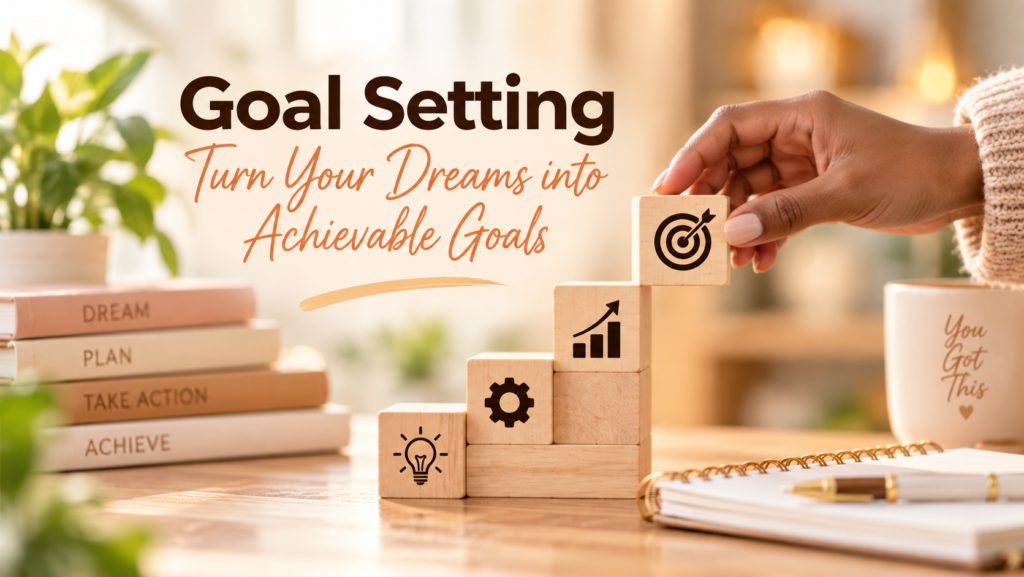
Now let’s move on to the second key aspect of personal development: goal setting.
As millennial women, our dreams can stretch across many areas of life — career, relationships, finances, health, business, and personal growth.
But having a dream and knowing how to move toward it are 2 different things.
That’s where goal setting comes in.
When you turn a bigger vision into clear, manageable steps, you give yourself something practical to work toward. Instead of simply wondering “How am I ever going to get there?” you can begin focusing on what you can do next.
Why Goal Setting Matters
One of the things I love about goal setting is that it can become a bridge between where you are now and where you want to go.
Your vision gives you direction. Your goals help you begin moving toward it.
Without clear goals, it can be easy to keep putting something off until “someday.” But when you identify specific actions and begin putting them into motion, that dream starts becoming something you can actually work toward.
Goals can also help you stay focused, measure your progress, and make decisions that support the direction you want your life to take.
And remember: having a goal does not mean every step has to be perfectly mapped out before you begin.
Sometimes clarity comes while you’re moving.
Question to Consider:
Do you set goals for yourself? When life doesn’t go as planned, what helps you stay focused and keep moving forward?
Let me know in the comments below!
4 Techniques for Effective Goal Setting
1. Start With Your Vision
Before deciding what you want to accomplish, take some time to think about the bigger picture.
What do you want your life to look like? What matters most to you? What direction do you want to move toward?
Your goals should connect to something meaningful rather than simply becoming another item on your to-do list.
Reflecting on your values, priorities, strengths, and long-term vision can help you choose goals that feel more intentional and aligned with where you want to go.
2. Break the Bigger Goal Into Smaller Steps
Big dreams can feel overwhelming when you try to accomplish everything at once.
Instead, break the bigger goal into smaller, manageable steps.
For example, if you want to start a business, your first steps might include researching your audience or customers, identifying your offer, creating a simple business plan, or connecting with people in your industry.
You don’t have to complete the entire journey today.
Focus on the next step you can realistically take.
Small, consistent actions can build momentum over time.
3. Make Your Goals SMART
One helpful framework for creating clearer goals is the SMART method:
Specific — Measurable — Achievable — Relevant — Time-bound
Instead of saying:
“I want to save money for my business.”
you could make the goal more specific:
“I will save at least $5,000 for my business startup fund within six months by setting aside approximately $835 each month.”
Now you know what you are working toward, how you will measure it, and when you want to achieve it.
SMART goals can help turn a broad intention into something much easier to track and act on.
4. Stay Flexible When Life Changes
Here’s something goal setting has taught me: the plan may need to change even when the vision hasn’t.
Life can be unpredictable. Responsibilities shift. Opportunities appear. Priorities change.
Can I get a witness? 🙌🏾
Being flexible doesn’t mean you’ve failed or that you’re giving up on your goal. Sometimes it simply means reassessing what is realistic for the season you’re in.
Ask yourself:
Do I need to change the goal ; or do I simply need to change the way I’m getting there?
Give yourself permission to adjust your timeline, rethink a step, or take a different route when necessary.
Progress doesn’t always happen in a straight line.
The important thing is to continue moving with intention, clarity, and a willingness to adapt along the way.
From Goal Setting to Continuous Growth
Setting goals can help you determine where you want to go and what steps you can take to get there.
But reaching one goal doesn’t mean your personal growth journey is finished.
That brings us to the third and final key aspect of personal development: Continuous Learning.
Continuous Learning: The Path to Lifelong Growth
Let me just say this: personal development is not a one-time event. It is an ongoing journey.
I actually consider myself a lifelong learner because I believe there is always something new we can discover about ourselves, our work, our relationships, and the way we want to live.
And let’s be real ;none of us has completely arrived.
If you feel like you have everything figured out, well… congratulations! 😄 But for the rest of us, there are always areas where we can continue learning, growing, and becoming more intentional.
Whether you’re trying to advance your career, strengthen your relationships, build a business, develop new skills, or gain greater clarity about your purpose, continuous learning can support that growth.
It is about being willing to expand your knowledge, skills, perspective, and self-awareness as your life and goals continue to evolve.
Why Continuous Learning Matters
Life keeps changing.
New technology emerges. Industries evolve. Responsibilities shift. New opportunities appear. And sometimes, the version of you who handled one season of life may need new tools for the next one.
That is why being willing to learn, unlearn, and relearn can be so valuable.
Continuous learning can help you stay adaptable, open-minded, and better prepared for new challenges.
For millennial women, this can be especially helpful when navigating different roles and transitions.
Whether you are building a career, raising a family, pursuing entrepreneurship, changing direction, or simply trying to understand what you want next.
You do not have to know everything.
But being willing to keep learning can help you move forward with greater awareness and confidence.
How Continuous Learning Supports Personal Growth
1. It Deepens Self-Awareness
Continuous learning does not only help you understand the world around you. It can also help you understand yourself.
As you read, reflect, try new things, ask questions, and gain new experiences, you may begin noticing more about your strengths, values, interests, patterns, and areas for growth.
That kind of self-awareness can help you make choices that feel more aligned with who you are and what matters most to you.
Sometimes, learning is not just about gaining information.
Sometimes, it helps you recognize something about yourself that you had not noticed before.
2. It Helps Build Confidence
There is something powerful about learning a new skill, understanding a topic more clearly, or realizing that you are capable of doing something you once thought was beyond you.
That kind of progress can build confidence over time.
Continuous learning gives you opportunities to practise, improve, and expand what you believe is possible for yourself.
You may not feel confident at the beginning.
But confidence often grows as you gain experience, apply what you are learning, and begin seeing your own progress.
3. It Can Expand Your Opportunities
Learning can also create new possibilities.
A new skill may help you qualify for a different role. A course may introduce you to a new career path. A conversation may spark a business idea. A book, workshop, or experience may help you see your life from a completely different perspective.
Continuous learning can support you as you grow in your current direction or help you recognize when you are ready to move in a new one.
And for millennial women balancing different responsibilities, goals, and aspirations, that flexibility can be incredibly valuable.
The more willing you are to keep learning, the more prepared you can become to recognize and respond to opportunities when they appear.
Sometimes growth is not about becoming someone completely new. It is about continuing to discover, develop, and strengthen what is already within you.
Take the Next Step: Discover Your WHY
One of the most meaningful parts of personal development and continuous learning is taking the time to understand who you are, what matters to you, and why you want the things you want.
Discovering your WHY can give you greater clarity and direction, helping you make choices that feel more aligned with your values, strengths, and the person you’re becoming.
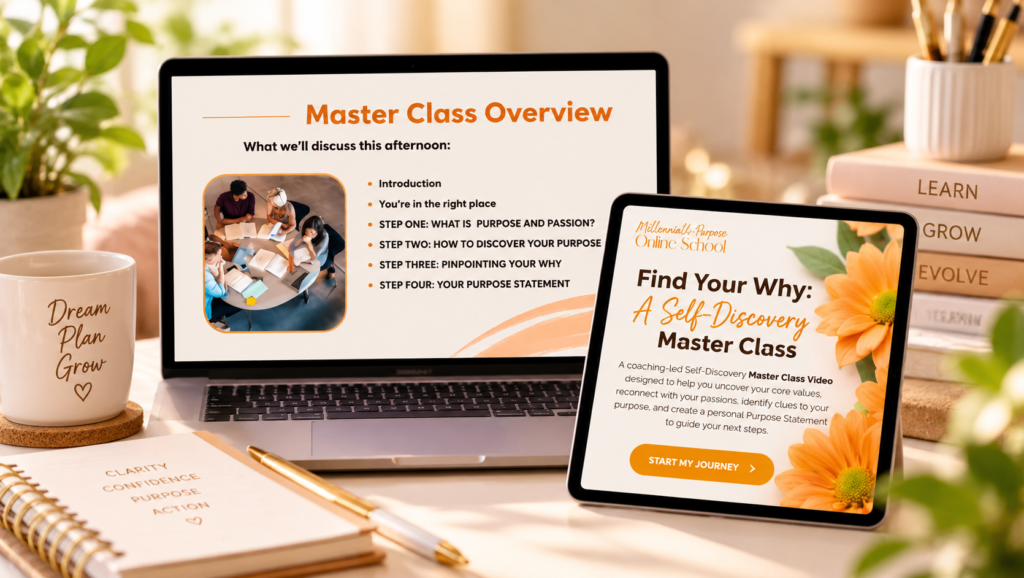
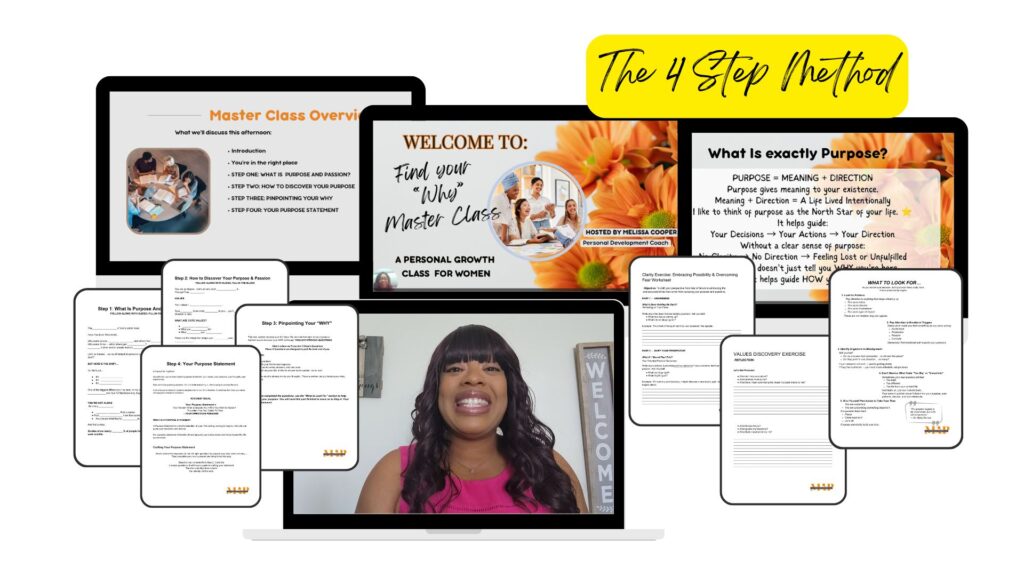
That’s why I created Find Your “Why”: A Self-Discovery Master Class — a guided experience designed to help women slow down, reflect, and begin connecting the clues that may already be present in their lives.
Inside the Master Class, I’ll guide you through a 4-step self-discovery process to help you explore your values, passions, limiting beliefs, strengths, and the patterns that may be pointing you toward your purpose.
You’ll also work through guided exercises and reflection questions designed to help you bring everything together into your own personalized Purpose Statement.
If you’re ready to stop guessing and begin gaining greater clarity about who you are and where you want to go next, this is a great place to begin.
Ready to discover your WHY?
See you inside the Master Class!